In an interview a few months ago, Mikel Arteta said this when asked about the style of play he wants to incorporate. “We want to move to a 4-3-3 but for that, you need a lot of specificity in every position but now in 5/6 positions, we don’t have it. The aggressiveness, the effectiveness, the amount of steals we make in opposition half I think we have been very steady against some big clubs”.
Since that interview, Mikel Arteta oversaw a tactical change to get Arsenal to play in a 4-2-3-1, with Emile Smith Rowe playing as a #10, but after watching Italy beat Bulgaria with a 4-3-3 with players of similar profile to those at Arsenal, it may be worth looking into this variant of a 4-3-3 at the club.
Arsenal’s current situation:
Arsenal has played a 4-2-3-1 ever since Boxing day, with the last big tweak to their system coming in with Ødegaard playing in the middle & Emile Smith Rowe playing on the right-hand side instead of the left-hand side. It has worked well for them, with their performances being increasingly better since then.
Their 4-2-3-1 can become a 4-3-3 as I will show with the example of the Italy 4-3-3 setup as the personnel required for both systems aren’t too dissimilar (they have different types of CF’s & DM’s but it’s enough to see you through a 38 game season.)
Italy 4-3-3:
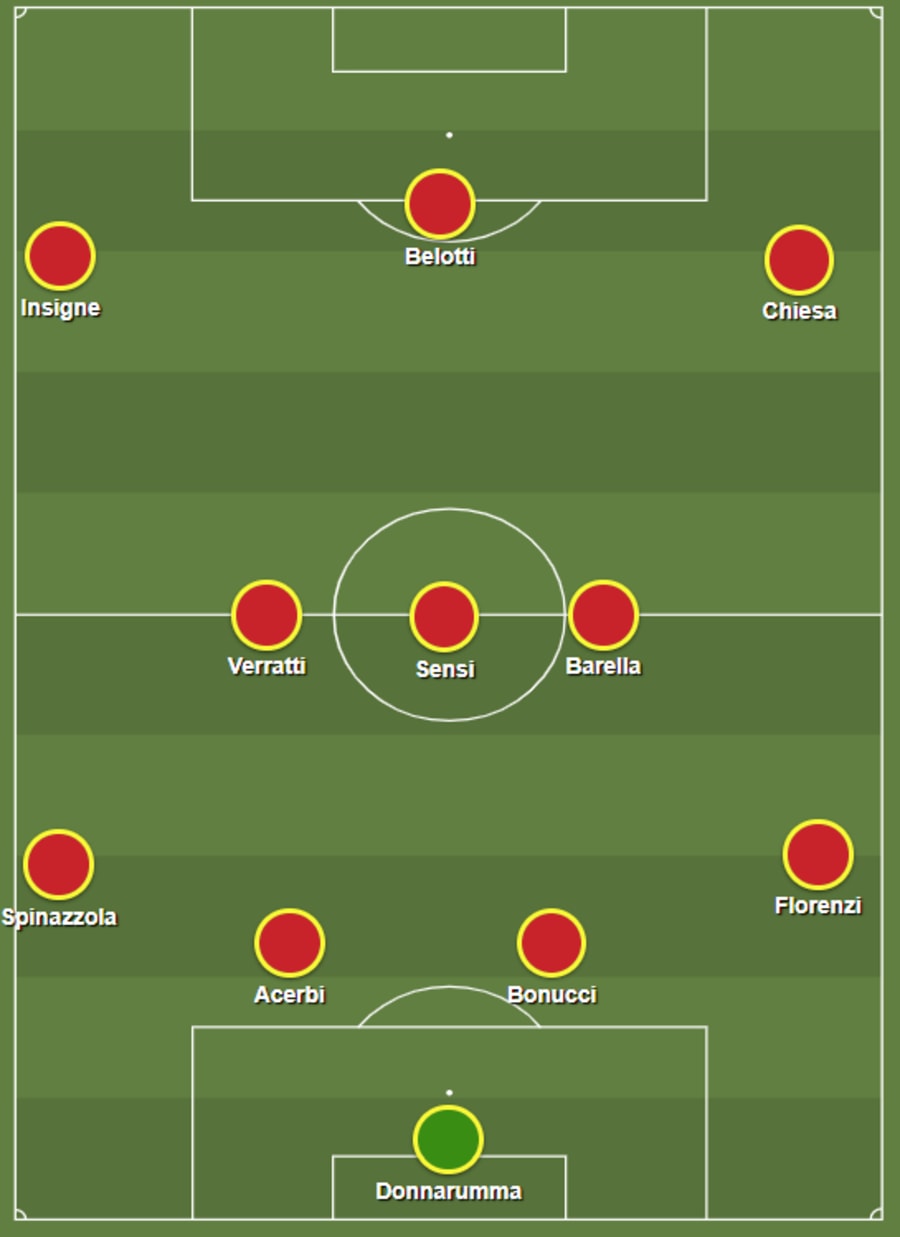
Italy’s starting 11 vs Bulgaria is the basis for their 4-3-3, with their approach differing in each half.
On my tactical analysis piece for Italy vs Bulgaria, I wrote “Roberto Mancini opted for a flat 4-3-3, with Sensi & Verratti both operating as left-sided midfielders (to help Italy create overloads to combat the Bulgarian 3-5-2 which would’ve given them a numerical advantage in the Bulgarian half,) which helped them get a penalty in the first half.
In the second half, no new players were introduced but Italy took more of a front-foot approach despite surrendering a bit more possession to Bulgaria. They built in a 2-3-5, intending to sustain their attacks & keep their players as high up in the pitch as possible (there was no good threat from Bulgaria so It was a strategy best fit for the game.)”
Italy 4-3-3 system explained
Some key ideas I picked up about this Italy side were
-
Use of left-hand side overloads to target the weaker flank of the opposition.
-
The RB rarely ventured forward & was the 3rd centre back for a lot of the match so the RCM (Barella) was given the license to roam anywhere on the RHS, which led to 2 good chances for Italy.
-
When Italy did defend, it was in a 4-4-2 with the winger always tracking back to prevent the opposing team from successfully overloading their attacking side.
-
The CB’s were passing outlets & they were able to make up for the CM’s being risk-averse when they were passing the ball in the middle of the pitch.
Italy looked to dominate the game by relying on their technical superiority (in comparison to their opposition) to keep the ball in their half, and when they were caught in transition, everyone was able to track back to leave a good distance between defence & attack.
Arsenal 11 using the Italy 4-3-3:
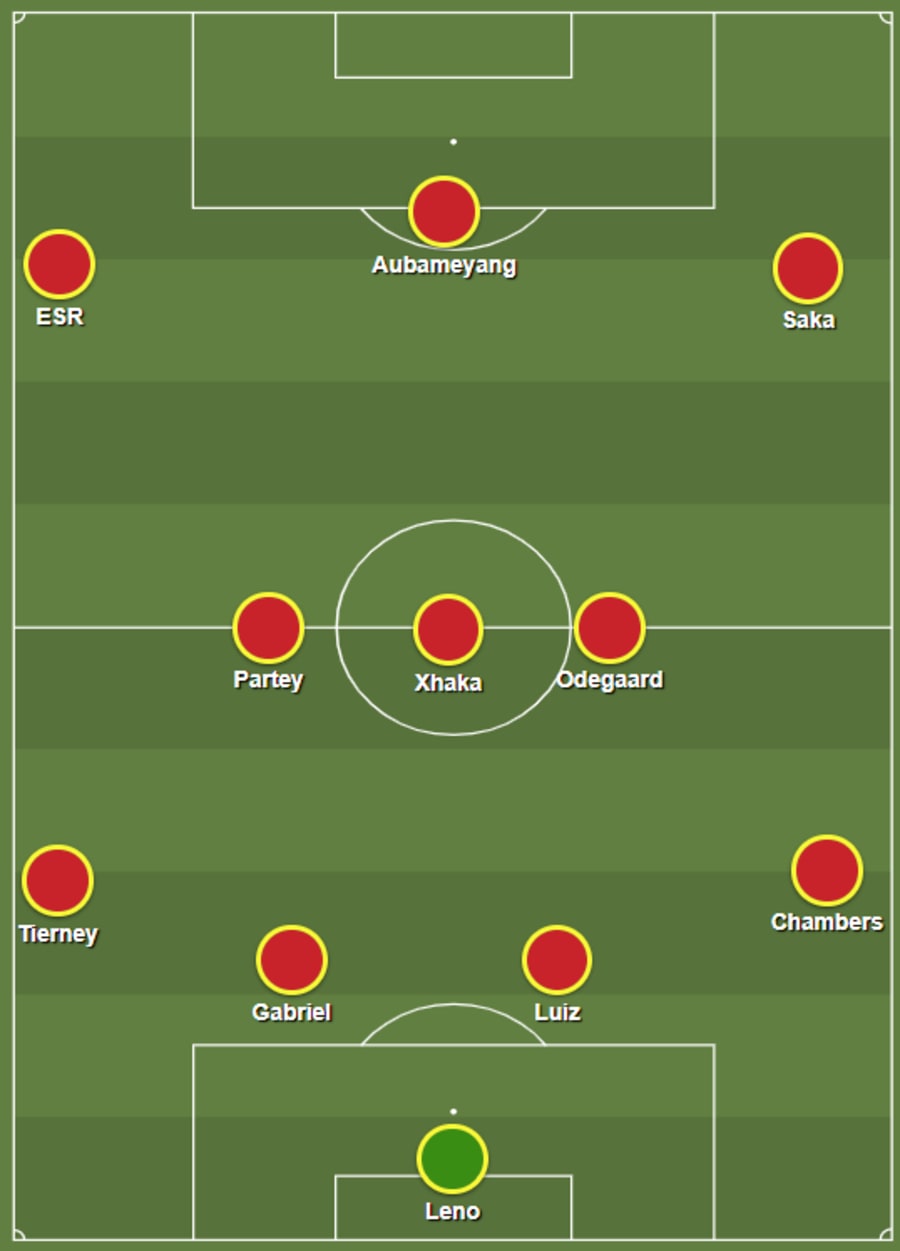
I’ll explain every Arsenal selection:
GK: Bernd Leno – This is a straightforward choice. Bernd Leno is indisputably Arsenal #1 goalkeeper, he’s a solid shot-stopper & he’s capable of getting the ball out to the centre backs so they can build a play on their own, something the Italian keeper is tasked with doing at goal kicks. The problem with him is that he won’t look to cover the goal when he misplaces a pass & he’ll try to rush out to get the ball when it may be better for him to stay back.
RB: Calum Chambers – Chambers has experience at playing as a right-sided centre back, and he’s good at covering/defending wide spaces so if Arsenal play a 3-2-5, he can play as the 3rd centre back and get the ball out to the left side to help speed up any Arsenal attempt at overloading the opposition’s right-hand side. His (lack of) pace may work against him if Arsenal face teams in a 4-3-3 that will look to target his side, especially if the other right-sided players fail to track back in time.
RCB: David Luiz – Luiz, like Bonucci, can serve as an extra outlet to get balls in behind the opposition defence for Bukayo Saka to chase or to get balls to the feet of Aubameyang for him to play off other attacking players. His concentration lapses help the opposition forwards gain another half of space, even if they’re infrequent. Pace isn’t an issue in the 4-3-3/3-2-5 as strikers don’t target him as much as they would target Chambers or Gabriel.
LCB: Gabriel Magalhaes – Strong defender that’s good at getting the ball to the LB/LW/LCM as quick as he can. He’s good at getting the ball out of harm’s way, even if he dwells on the ball for a little bit too long. As he’s tasked with doing the lion’s share of defending (as Acerbi was for Italy) he might find it hard to play well when under pressure from ‘better sides,’ but that’s inconclusive at the moment.
LB: Kieran Tierney – As Arsenal will attempt attacking overloads on their left-hand side, the best person to have out wide, he’ll buy space for the other left-sided players to attack (namely ESR) and he can switch the play to Bukayo Saka if he has drawn enough players to his side. His problem is the clash he could have with the LW in the zones he’s playing with, but with a right-footed left-sided player, that should be minimised.
DM: Granit Xhaka – He mirrors Sensi’s role by being situated closer to the left side than the right side, he’s tasked with helping ball circulation & keeping Arsenal in control of possession. His lack of mobility/good sprint speed will be an issue as he won’t be able to cover ground quick enough to cover for lapses in the CB’s concentration.
RCM: Martin Ødegaard – His role is akin to Nicolo Barella in this system, he’s meant to be Arsenal’s main midfield attacking threat, whilst receiving the ball in the opposition’s half & getting the ball at the feet of attackers. He’s also tasked with being a nuisance in between the lines & occupying the opposition’s defenders & midfielders so the RW (Saka) can exploit space that will be left free. Ødegaard likes to get a lot of touches of the ball, so simplifying his game could either lead to him performing worse as he can’t build his confidence through his one-twos that bring him into the game or it could lead to him performing better as his focus will be on making the most of every pass he receives.
LCM: Thomas Partey – Partey is there to be a ball carrier & to get the ball to the LW/LB as often as possible to help Arsenal sustain their presence in the opposition’s final third. As he can be lax when off the ball, teams may look to crowd him out of the game by trying to play through him when Tierney is higher up the pitch. That risk can be minimised if Xhaka can cover enough ground to slow the opposition’s attack if it happens.
RW: Bukayo Saka – Saka plays similar to Chiesa, he is isolated on the right-hand side to take advantage of any gaps between the LCB/LB, but his role changes during the game. He can drift inwards & look to become another creative outlet for Arsenal if there is a need for a central overload (through weak opposition CB’s or a bad defensive structure.)
CF: Pierre-Emerick Aubameyang – Aubameyang isn’t similar to Belotti, but as he can make runs in behind the RCB (Emile Smith Rowe will be the biggest beneficiary of this) and as he can link up to a basic level, he was a no brainer for this position. Aubameyang’s willingness to drop a bit deeper & connect the play between Smith Rowe & Saka will be something to be questioned, but we won’t know until it happens.
LW: Emile Smith Rowe – Smith Rowe is meant to dominate the left half-space through driving inwards when he does receive the ball, Aubameyang is meant to run in behind so Arsenal can get a penalty or at least get a good goal scoring chance. As he isn’t proven at LW at senior level, it will take him some time to be ‘consistent’ enough for that role, and he needs to improve his finishing so Arsenal isn’t dependent on Aubameyang alone to do the goods.
Arsenal 11 using the Italy system explained:
I look at how Arsenal should set up in defence, transition & attack with some reference to in-game scenarios in the Italy vs Bulgaria game:
In Defence:
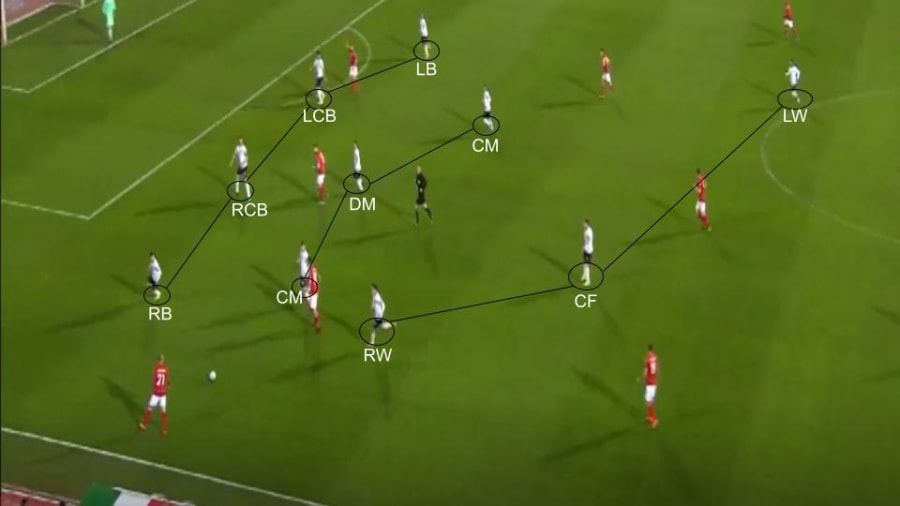
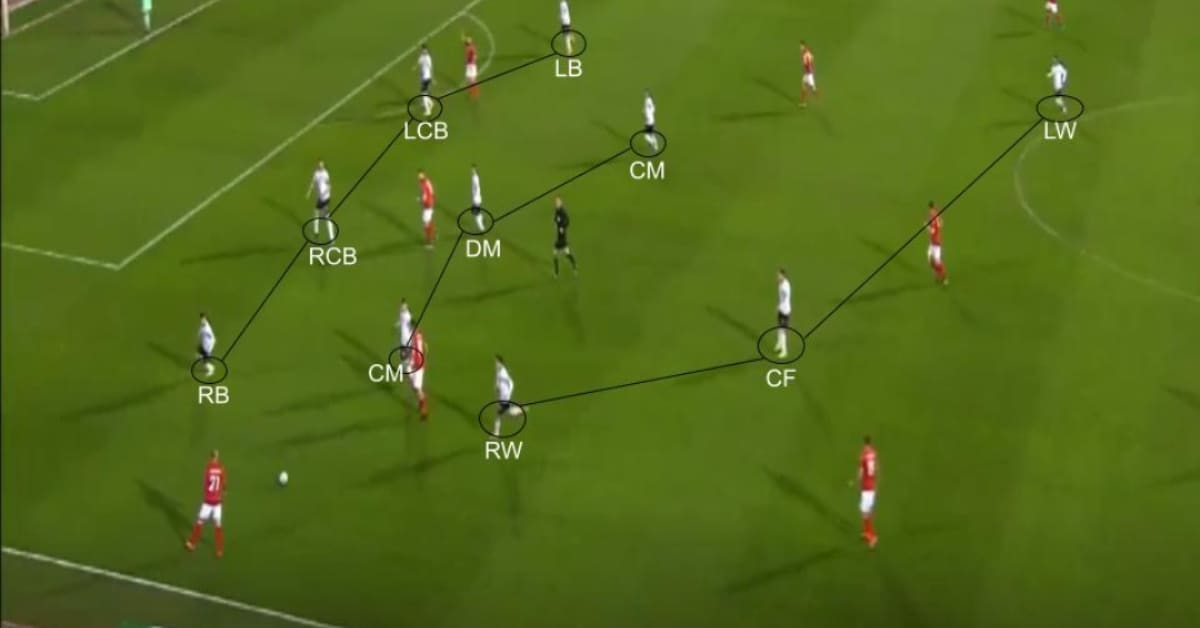
Arsenal should look to defend in a 4-4-1-1 with 1 of the front 3 dropping back to prevent the opposition from successfully overloading the part of the pitch where the ball is being played. Using the example of Italy vs Bulgaria, Chiesa drops back to give his RCM & RB an extra body to help prevent any additional threat from the opposition CF or LCB (who are either close to the action or ready to make a run in behind to exploit the RB’s blindspot.)
The advantage of playing in this setup (from an Arsenal perspective) is that all of the front 3 (ESR, Aubameyang & Saka) love to defend when they have to & they’re all able to block space for players behind them to run into. This is similar to how Arsenal have defended, with the difference being the CF (Aubameyang) would have to drop deeper and play the ball to the more advanced forward as quick as possible if he receives it instead of being the outlet that would be fed the ball.
In Transition:
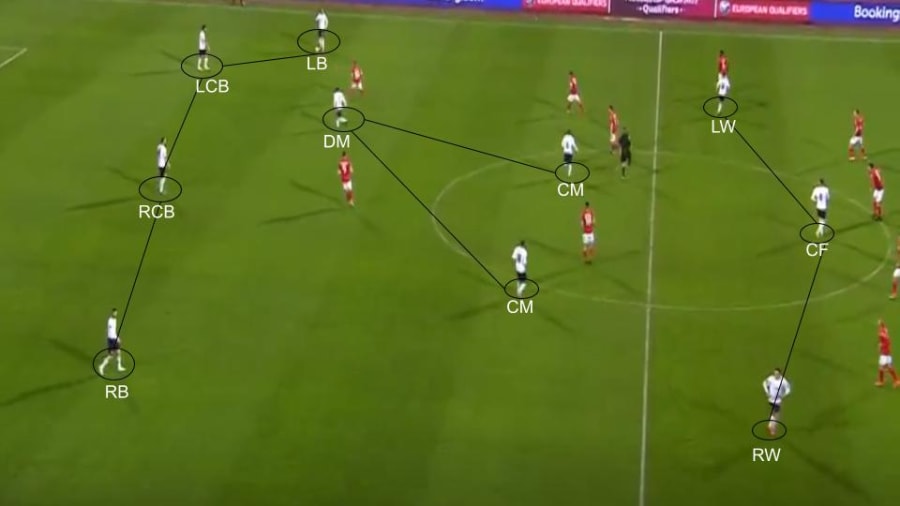
Arsenal should look to build from goal in a back 4 with their DM providing a solid passing option to progress the ball from to bait the opposition attackers in the direction of the ball, with most of their building occurring from the right-hand side. They can switch play (just like Italy have done in the picture) to take advantage of gaps that will be prevalent in the opposition’s attacking game. The biggest beneficiary of this will be Bukayo Saka as he’ll have a lot of space to run into & link up with both Chambers & Ødegaard to help build the attack on the right before switching the direction when Arsenal have enough men forward to overload the opposition’s right-hand side.
In Attack:
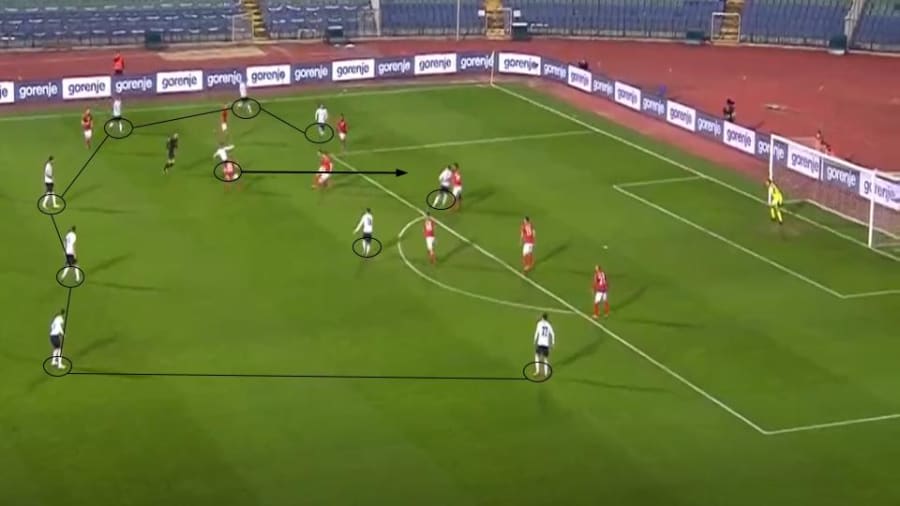
When Arsenal are in attack, they’ll look to overload the LHS in this system, with Tierney situated wide on the left flank with Xhaka/Partey covering for him as there will be extra men committed by the opposition in that space to mitigate risk from a turnover from Tierney losing the ball. When ESR drifts inwards, Aubameyang will make his run with the aim of ESR getting the ball to his feet for a good chance or at least a penalty.
Issues with Arsenal using this system:
-
Arsenal WILL get found out quickly If they don’t have a dominant RB & a DM that can cover space on both the left & right-hand side.
-
Teams can mark Bukayo Saka out of the game by getting 2/3 men on him when Arsenal attack from the left.
-
This system is less protective than the current Arsenal system, which will lead to more defensive errors by players whilst they get used to the change in physical demands of this setup.
-
Martin Ødegaard, someone who needs touches to get involved in the game will be out of the game for long periods. The impact of that system will not be known until he plays.
Last Thoughts:
The system is good for Arsenal as it’s similar to what they have already, with minor tweaks (Ødegaard dropping into a deeper role but with increased final third freedom.)
There are still flaws, which I’ve outlined but a lot of those can be solved (dependency on the left-hand side) by signing a new RB & a new DM.